Who fits the FDA-approved sleep-apnea indication?
The labeled population is adults with obesity and moderate to severe obstructive sleep apnea.
The diagnosis and severity should be established through a qualified evaluation. The label does not extend the sleep-apnea indication to children, people with mild sleep apnea, people without obesity, or other GLP-1 products. A clinician still needs to review medical history, current medicines, contraindications, and treatment goals.
What did the Zepbound sleep-apnea studies measure?
Two randomized, placebo-controlled trials followed 469 adults for 52 weeks and measured change in the apnea-hypopnea index, or AHI.
One trial enrolled people who were unable or unwilling to use positive airway pressure (PAP); the other enrolled people who were using PAP. Participants had obesity and moderate to severe obstructive sleep apnea, and people with type 2 diabetes were excluded. The FDA concluded that Zepbound reduced breathing events compared with placebo, but an average trial result cannot predict one person's response.
Can Zepbound replace CPAP?
Zepbound and PAP should not be treated as interchangeable, and PAP should not be stopped without clinical reassessment.
PAP can support the airway during sleep when it is used, while medication response and weight change develop over time. Feeling better or snoring less does not prove that breathing events have normalized. The clinician managing sleep apnea may use symptoms, PAP data, examination, and repeat sleep testing before changing treatment.
Interactive model
Two levers on the same airway
Adjust the soft tissue around the airway, switch between awake and asleep, and turn PAP on or off to see why the two treatments work on different timescales, and why neither one replaces a repeat test.
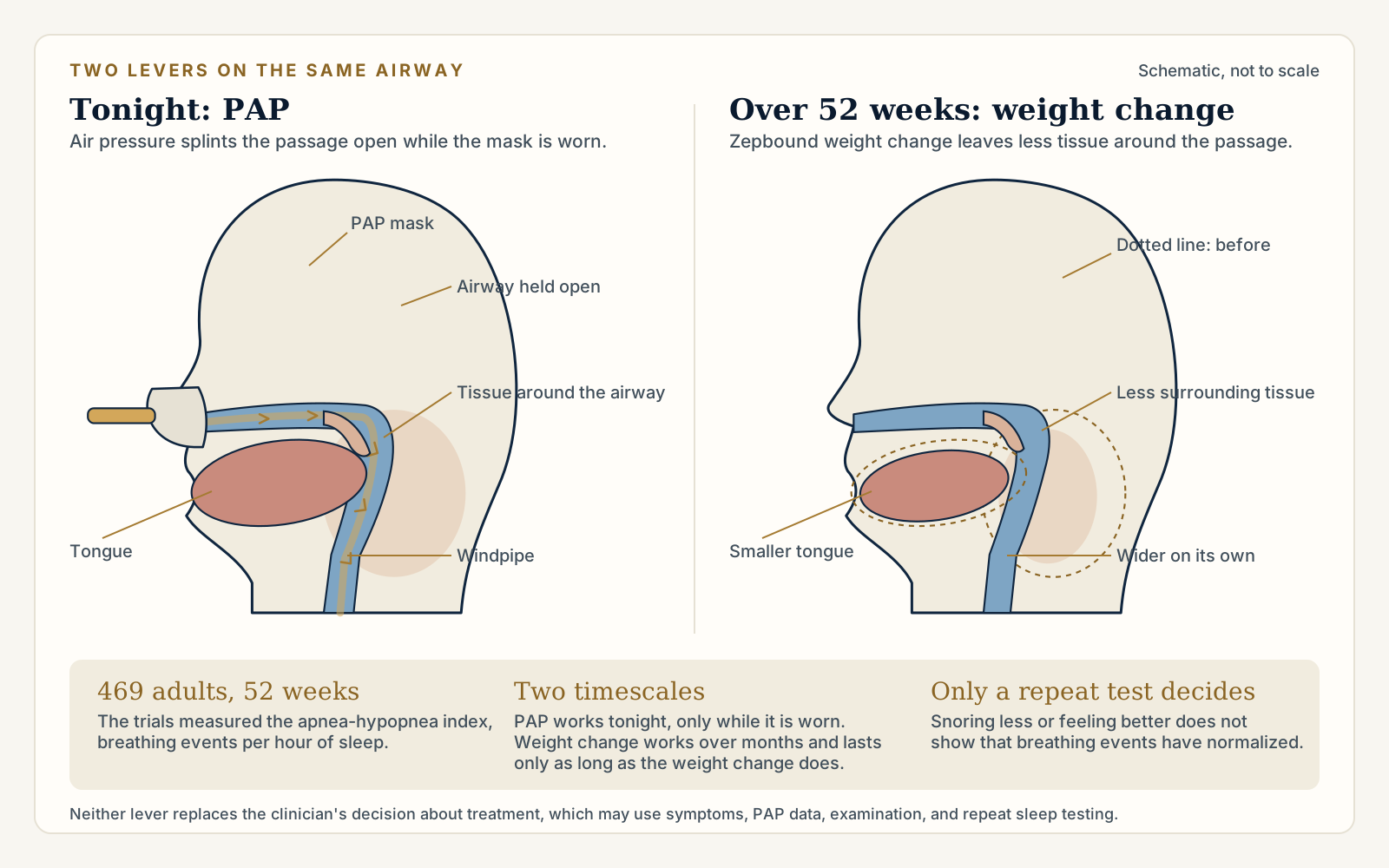
A schematic of the upper airway, not a prediction for any person. The trials followed participants for 52 weeks and measured the apnea-hypopnea index; feeling better or snoring less does not show that breathing events have normalized.
What safety questions belong in the conversation?
Use the current prescribing information—not a class-wide summary—to review whether Zepbound is appropriate.
The current label includes a boxed warning about thyroid C-cell tumors and contraindicates use with a personal or family history of medullary thyroid carcinoma or Multiple Endocrine Neoplasia syndrome type 2. It also describes important risks and precautions involving severe gastrointestinal reactions, kidney injury from volume depletion, gallbladder disease, pancreatitis, serious hypersensitivity, low blood sugar with certain diabetes medicines, diabetic retinopathy complications, and pulmonary aspiration during general anesthesia or deep sedation. Tell the prescribing and procedural teams about all medicines and planned procedures.
What do insurers usually require to cover Zepbound for sleep apnea?
Prior authorization built on a sleep study showing moderate to severe obstructive sleep apnea, a BMI of 30 kg/m² or higher, adult age, and prescriber documentation; some plans add PAP-therapy status and a prior weight-loss effort.
Two policies fetched in September 2026 show the pattern. UnitedHealthcare's commercial prior-authorization policy “Zepbound (tirzepatide) – Obstructive Sleep Apnea Only,” effective September 1, 2026, requires all of the following: age 18 or older; medical records documenting a BMI of 30 kg/m² or higher; moderate to severe OSA on a sleep study with an apnea-hypopnea index, respiratory event index, or respiratory disturbance index above 15 events per hour; at least one previous unsuccessful dietary effort; either continued OSA symptoms despite PAP adherence of at least 4 hours a night on at least 70% of nights, or documentation that the patient is not a PAP candidate; use with a reduced-calorie diet and increased physical activity; no diabetes diagnosis or HbA1c above 6.5%; prescriber attestation that positional therapy and avoiding alcohol or sedatives before bedtime were counseled; no planned surgery for sleep apnea or obesity and no predominant central or mixed apnea; and prescribing by or in consultation with a sleep specialist, pulmonologist, otolaryngologist, or physician experienced in OSA. Initial approval is 6 months. CVS Caremark's Zepbound criteria (document 6192-C, 2025) ask for less on the OSA pathway: moderate to severe OSA with an AHI of at least 15 events per hour on polysomnography or a technically adequate home sleep apnea test, plus a current BMI of 30 kg/m² or higher, with a 6-month initial approval and 12-month continuation. Plans differ and revise these documents, so ask your plan for its current Zepbound OSA criteria by name.
Does Medicare cover Zepbound for sleep apnea in 2026?
Possibly through a Part D plan, not through the Medicare GLP-1 Bridge: Medicare says people with moderate-to-severe sleep apnea are not eligible for the Bridge, but their Part D plan might cover the drug.
Medicare.gov's GLP-1 coverage page, as of September 2026, describes the Medicare GLP-1 Bridge that began July 1, 2026: a $50 copayment for a one-month supply of Foundayo, Wegovy, or Zepbound KwikPen for adults who meet its BMI and condition criteria, with prior authorizations valid through December 31, 2027. The same page says you are not eligible if you have type 2 diabetes, moderate-to-severe sleep apnea, or fatty liver disease, “but your Part D plan might cover your GLP-1s.” CMS's provider page for the Bridge lists moderate to severe obstructive sleep apnea as a Part D-covered indication that is ineligible for the Bridge and states there is no appeals process under the Bridge. For sleep apnea, then, the questions are whether your Part D or Medicare Advantage drug plan lists Zepbound, what prior authorization it requires, and what cost-sharing applies. Lilly's coverage page advertises “no more than $50/month” for Medicare Part D patients, but ties that to the Bridge's criteria and calls it “not a guarantee of coverage.” Ask the plan for a written coverage determination.
How much does Zepbound cost with and without coverage?
As of September 2026, Lilly lists Zepbound at $499 to $1,086.37 per fill, offers self-pay pricing from $299 a month, and says commercially covered patients may pay as little as $25 with its savings card.
Lilly's pricing page, citing wholesale acquisition cost accessed January 1, 2026, gives a list price of $499 to $1,086.37 per fill and direct-to-patient self-pay prices of $299 for 2.5 mg, $399 for 5 mg, $499 for 7.5 mg, and $699 for 10, 12.5, and 15 mg, with a month defined as 28 days. Lilly's savings page, as of September 2026, adds a refill price of $449 for 7.5 mg and above when refilled within 45 days, and Lilly's LillyDirect page notes that 2.5 mg is a starting dose, not a maintenance dose. With commercial insurance that covers Zepbound, the savings card can bring the cost to $25 for up to a three-month fill, capped at $100 per month of supply and $1,300 per calendar year; with commercial insurance that does not cover it, the card lists $299 for a one-month KwikPen fill. The card excludes Medicare, Medicaid, and other government programs and expires December 31, 2026. Pharmacy prices vary and these figures change, so confirm at the time of filling.
How do you prepare a prior-authorization packet?
Match the packet to the plan's written criteria before the prescriber submits, so the first request is complete.
Ask the plan for its Zepbound OSA criteria and assemble what they name: the sleep-study report with the date, test type, and AHI, REI, or RDI; a current height, weight, and BMI; chart notes documenting prior diet or weight-management attempts and their dates; PAP download data showing hours and nights of use, or the clinician's note explaining why PAP is not an option; recent HbA1c or diabetes status where the plan asks; the prescriber's specialty or a consultation note; and any attestation lines the policy requires, such as UnitedHealthcare's counseling, no-planned-surgery, and no-predominant-central-apnea statements. Lilly publishes a prior-authorization resource guide and a sample letter of medical necessity for prescribers. Keep copies of everything submitted and note the plan's decision deadline.
What can you do after a denial?
Read the denial reason, fix any missing documentation, then use the internal appeal, a peer-to-peer review, and external review in that order.
The denial letter must state the reason and how to appeal. For commercial plans, HealthCare.gov describes two levels as of September 2026: an internal appeal filed within 180 days of the denial, which the insurer must decide within 30 days for a drug you have not yet received or within 4 business days when urgent; then a written external-review request within 4 months of the final internal decision, decided no later than 45 days, or 72 hours when expedited, with the insurer required by law to accept the external reviewer's decision. Denials that involve medical judgment qualify for external review. Between those steps the prescriber can request a peer-to-peer review with the plan's medical director to discuss the criteria directly, and Lilly's coverage page suggests a new prior authorization with additional rationale before appealing. Medicare Part D plans use their own coverage-determination and appeal process, and the GLP-1 Bridge has no appeals process.
Appointment checklist
Bring four answers to the prescribing visit
A useful appointment connects the medication decision to the existing sleep-apnea plan.
- 1
Diagnosis and severity
Bring the sleep-study result, including the AHI and date, plus the clinician's diagnosis.
- 2
Current sleep treatment
List PAP settings and use, oral-appliance use, prior procedures, current symptoms, and any problems tolerating treatment.
- 3
Medication and safety history
Bring all prescriptions, over-the-counter medicines, supplements, allergies, relevant family history, and planned procedures involving anesthesia or deep sedation.
- 4
Monitoring and coverage plan
Ask who will monitor side effects, weight, daytime function, sleep-apnea response, refills, prior authorization, and the timing of reassessment.
Common questions
Questions patients ask first
Which GLP-1 is FDA approved for sleep apnea?
Zepbound (tirzepatide), a GIP and GLP-1 receptor agonist, has an FDA-labeled indication to treat moderate to severe obstructive sleep apnea in adults with obesity, together with a reduced-calorie diet and increased physical activity.
Are Ozempic or Wegovy approved to treat sleep apnea?
The FDA sleep-apnea approval described here is specific to Zepbound. Do not transfer that indication to another product; check the current FDA labeling for the exact medicine and indication.
Can I stop CPAP after starting Zepbound?
Do not stop PAP without the clinician managing your sleep apnea. Medication response, weight change, feeling better, or less snoring do not by themselves confirm that airway obstruction has resolved.
Does weight loss cure sleep apnea?
Weight reduction may improve obstructive sleep apnea when obesity contributes, but it does not guarantee resolution. Follow-up and sometimes repeat sleep testing are needed before changing treatment.
What BMI is required for Zepbound coverage for sleep apnea?
The FDA indication is adults with obesity, and both policies checked in September 2026 set the line at a BMI of 30 kg/m² or higher: UnitedHealthcare's OSA-only policy requires medical records documenting a BMI of 30 or more, and CVS Caremark's Zepbound criteria require a current BMI of 30 or more. Neither document lowers that threshold for the sleep-apnea pathway, so ask your own plan whether it uses a different figure.
Is a sleep study required to get Zepbound covered?
Yes in every policy we could verify as of September 2026. UnitedHealthcare requires a sleep study with an AHI, REI, or RDI above 15 events per hour, and CVS Caremark requires an AHI of at least 15 events per hour on polysomnography or a technically adequate home sleep apnea test. Neither document states how recent the study must be, so ask the plan before ordering a repeat test.
Does UnitedHealthcare cover Zepbound for sleep apnea?
UnitedHealthcare publishes a commercial prior-authorization policy, “Zepbound (tirzepatide) – Obstructive Sleep Apnea Only,” effective September 1, 2026, that approves Zepbound for 6 months when its criteria are met: age 18 or older, a BMI of 30 kg/m² or higher, a sleep study showing more than 15 events per hour, a prior dietary effort, PAP failure or ineligibility, no diabetes, counseling attestations, and a qualified prescriber. The policy notes that state mandates and the member's specific benefit plan can change the criteria, so confirm with the member line.
Does Medicare Part D cover Zepbound for sleep apnea?
It depends on the plan. Medicare.gov says people with moderate-to-severe sleep apnea are not eligible for the Medicare GLP-1 Bridge, “but your Part D plan might cover your GLP-1s,” and CMS lists obstructive sleep apnea as a Part D-covered indication. Check the plan formulary and prior-authorization rules, and ask for a coverage determination in writing.
How much does Zepbound cost without insurance?
As of September 2026, Lilly's self-pay pricing is $299 a month for the 2.5 mg starting dose, $399 for 5 mg, and $449 for 7.5 mg and higher when refilled within 45 days, with regular prices of $499 to $699 otherwise; the list price is $499 to $1,086.37 per fill. Retail pharmacy prices differ, and these figures change.
What should I ask before a procedure or surgery?
Tell the prescribing clinician and the procedural or anesthesia team that you take Zepbound. The current label includes a warning about pulmonary aspiration during general anesthesia or deep sedation; the treating team should give individualized instructions.
Authoritative sources
Review the public guidance
- FDA: First Medication Approved for Obstructive Sleep Apnea
- DailyMed: Current ZEPBOUND Prescribing Information
- DailyMed: ZEPBOUND Medication Guide
- UnitedHealthcare: Zepbound (tirzepatide) – Obstructive Sleep Apnea Only Prior Authorization Policy (effective September 1, 2026)
- CVS Caremark: Zepbound Prior Authorization Criteria (6192-C)
- Medicare: Current GLP-1 Drug Coverage Information
- CMS: Medicare GLP-1 Bridge Information for Providers
- Lilly: Zepbound Pricing Information (list price)
- Lilly: LillyDirect Zepbound Self-Pay Pricing
- Lilly: Zepbound Savings Options
- Lilly: Zepbound Access and Coverage (prior authorization and appeals)
- HealthCare.gov: Internal Appeals
- HealthCare.gov: External Review
- Medicare: Sleep Study Coverage
Medically reviewed by Domenico Savatta, MD, FACS on September 13, 2026. Source links support education, not a personal recommendation.